內容簡介
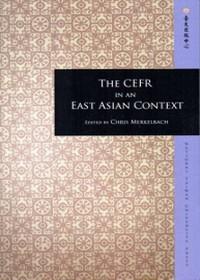
In the 21st century, multiculturalism and multilingualism form highly complex issues that are addressed around the globe by educators, researchers, and politicians alike. In this context, the Common European Framework of Reference for Languages (CEFR) remains one of the most ambitious examples of language policy. More than a simple linguistic policy, it also helps foreign language learners to construct their linguistic and cultural identity. The term multilingualism as used by the EU covers that of plurilingualism, which highlights the communicative value of any given language, thereby encouraging persons living in Europe to develop their communicative competence in a plurilingual Europe. As for the situation in East Asia, many educational institutions and even government agencies have adopted the CEFR over the last decade for various reasons. However, doubts exist about whether this move to implement a reliable language proficiency assessment was well researched or merely blindly adopted due to political motivations. A part of the CEFR is based on the ideal of a plurilingual Europe and the fact that most Europeans do command a certain level of language competence in several languages and that they can oftentimes build upon it when learning another European language. No doubt, East Asian societies are multilingual societies as well. Besides their mother tongue, the majority of people living in this region speak the standard variety of their respective country. However, does that mean that native speakers of two or more Asian languages have an advantage when learning European languages? Foreign language educators from Europe and the East Asian region are joined in this project, engaging in very stimulating discussions and uncovering the vast potential of the CEFR as a catalyst in pluricultural and plurilingual education facing the new millennium. This book presents a unique manifestation of a scholarly discourse related to the CEFR in the East Asian region.
目次
Introduction / Chris Merkelbach1. The CEFR – A Work in Progress / Angelika Loo2. Using the Common European Framework of Reference for Languages in Asia: Promises and Pitfalls / Tushar Chaudhuri3. Is the CEFR Fit for Purpose? / Philippe Valax4. Towards Implementing the Principles of the Common European Framework of Reference for Languages within the Japanese Educational System / Shien Sakai5. The CEFR and German as a Foreign Language in Taiwan: A Glocalized Variety? / Jörg-Alexander Parchwitz6. How the CEFR Serves as a Guideline for Foreign Language Learning, Teaching and Assessment in Taiwan: Examples with French as a Foreign Language / Louisa Hsiang-I Lin7. CEFR and the Instruction of Greek / Vassilis Vagios8. The Development of DELE Exams in East Asia: An Overview / Jorge Mojarro Romero9. Building Learning Strategies for European Languages in East Asia within the Common European Framework of Reference for Languages / Fabrizio Grasselli10. Discourse in the EU: Languages, Cultures and the CEFR / Vassilis Vagios, Chris Merkelbach & Louisa Hsiang-I Lin